Introduction:
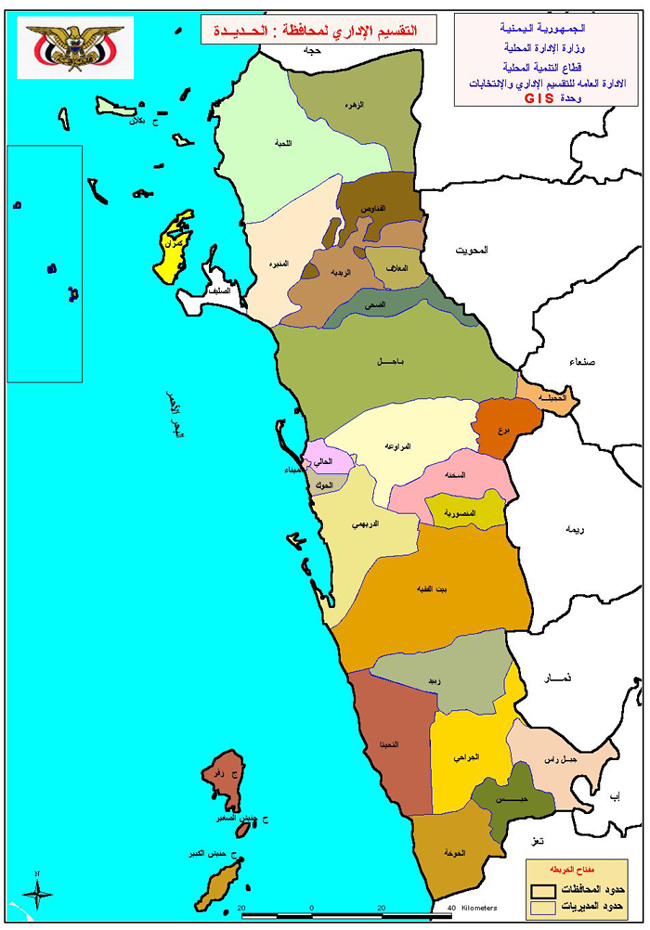
The city of Al-Hodeidah is located on the Red Sea coast, about 226 kilometers away from the capital, Sana'a. The population of the Red Sea bride constitutes approximately 11% of the total population of the Republic. It ranks second in terms of population after the Taiz province. The province consists of 26 directorates, with Al-Hodeidah city being the center of the province. Agriculture is the main activity for the province's inhabitants, occupying the first place among the republic's provinces in the production of some agricultural crops, accounting for about 28.6% of the total production. The important agricultural crops include vegetables, fruits, fodder, and fishing activities, as the province has a long coastline rich in fish and marine life. The commercial activity in Al-Hodeidah is distinguished by the processes of import and export through the second major port of the Republic of Yemen. The province also houses several industrial facilities, including the Bajil Cement Factory, food industries, and soft drink factories. The important minerals found in the province's territories include granite, black sand, dyes, ceramics, rock salt, gypsum, and some other clay minerals.
Tourist Attractions in Al-Hodeidah province are diverse, in addition to its historical landmarks, including the Islamic monuments in the historic city of Zabid, such as the Grand Mosque, Ash'ar Mosque in Bayt al-Faqih city, and the coastal city of Al-Khawkhah, as well as the natural hot spring of Al-Sakhnah. The average temperature in Al-Hodeidah throughout the year is around 29 degrees Celsius.
Location:
Al-Hodeidah province is located in the western part of the Republic of Yemen, stretching along the western coastal strip overlooking the Red Sea, between the longitudes 42-43 degrees east of Greenwich and latitudes 14-16 degrees north of the equator. It is about 226 kilometers away from the capital, Sana'a. The province is connected to parts of the Ibb, Dhamar, Sana'a, Raymah, Al-Mahwit, and Hajjah governorates from the east, Hajjah governorate from the north, and Taiz governorate from the south, and the Red Sea from the west.
Area:
The area of the province is approximately 117,145 square kilometers, distributed among twenty-six directorates.
Population:
The province ranks second in terms of population after the Taiz province, with a population of 2,157,552 according to the General Census of Population, Housing, and Establishments in 2004. The population grows annually at a rate of 3.25%.
Topography:
The province of Al-Hodeidah is generally composed of a flat plain sloping gently towards the sea, with a wavy surface resembling successive transverse waves. Its depressions contain the courses of tributaries that flow into the sea, while the elevations are mostly formed by some low sand dunes or remnants of receding masses inward. Geologically, this coastal plain is part of the Red Sea Rift covered by recent sediments, which can be divided into two parts that are difficult to distinguish or separate. In the part close to the Red Sea coast, the sediments consist of marine formations belonging to the end of the third and fourth epochs, covered by recent aeolian (windblown) sand deposits. The part near the foothills of the mountains consists of deltaic sediments, some of which are coarse, represented by large gravel and rock fragments, while others consist of fine particles of rock carried by the valleys descending from the mountains. These coarse deltaic sediments gradually disappear under the sandy deposits, with some springs and freshwater springs appearing at the boundary between them.
Climate:
The climate of Al-Hodeidah province is influenced by the general conditions that affect the climate of Yemen, leading to various manifestations of rainfall. Some of the rainfall on the inland highlands finds its way, or the majority of it, through streams, tributaries, and valleys that reach the Red Sea. Alternatively, it may find its way through layers to the Tihama Plain on the Red Sea. The climate of Al-Hodeidah province is characterized by a long, hot summer and a short, warm winter.
Vegetation:
The vegetation in the province is diverse, with abundant perennial trees, as well as grasses and small plants in the non-cultivated plains and sand dunes. Date palms and various types of perennial trees are also widespread at the ends of the valleys and their plains, along with some perennial trees. Vegetation is absent in rocky areas and coastal regions, except for some Doum palm trees that are abundant in various parts of the coastal strip.
Rare and Available Wildlife and Birds in the Province:
Various species of wild animals, both predatory and domesticated, were once widespread in the Tihama plains, but over time, many of them have disappeared and become extinct, except for a few that are concentrated in the eastern parts near uninhabited mountainous areas, such as foxes, jackals, leopards, rabbits, and hyenas, although in small and rare numbers.
As for birds, there are falcons, eagles, vultures, herons, owls, wild pigeons, seagulls, and hoopoes in the Tihama plain.
Al-Hodeidah province possesses diverse investment potentials as it is one of the coastal provinces. It is characterized by climatic diversity between its mountainous regions, coastal areas, plains, and valleys. In addition to the province's economic importance, which is represented by agricultural activity, it ranks first among the republic's provinces in the production of certain agricultural crops, accounting for up to 28.6% of the total production. The main agricultural crops include vegetables, fruits, and fodder, in addition to fishing activity. The province overlooks a long coastal strip rich in fish and marine life. Moreover, commercial activity in the province is distinguished through the process of import and export, facilitated by the second major port in the Republic of Yemen. The province is also home to several industrial facilities, including the Bajil Cement Factory, as well as some food and beverage industries. Additionally, the province harbors numerous untapped mineral resources and wealth, with information indicating the presence of various minerals in its territories, including granite, black sands, pigments, ceramics, rock salt, gypsum, and other clay minerals. Furthermore, the province is characterized by diverse tourist landmarks, including Islamic monuments in the historic city of Zabid, such as the Great Mosque, Ash'ari Mosque in Bait Al-Faqih city, the coastal city of Al-Khokha, and the natural hot spring, Hammam Al-Sakhnah.
Due to the vast agricultural areas, large investment farms have spread in the agricultural sector (plants and animals). Al Hudaydah Governorate occupies the first position among the governorates of the Republic in the production of certain agricultural crops, reaching up to 28.6% of the total production. The main economic activities in the governorate are concentrated as follows:
Agricultural Activity:
The governorate is characterized by abundant and extensive fertile agricultural lands, ranging from the far north to the far south. Some areas are irrigated by wells, while others rely on seasonal rainfall. Al Hudaydah Governorate ranks first among the governorates in agricultural activity, with a cultivated area of 266,262 hectares out of the total arable land area of 1,188,888 hectares for all the governorates, accounting for 22.3% of the total. The agricultural production quantity in Al Hudaydah Governorate reached 993,658 tons out of the total agricultural production quantity for the governorates, which is 3,900,714 tons, accounting for 25.47%.
Animal Production:
Livestock grazing and animal husbandry are important activities for the population in the governorate. The availability of vast grazing lands and large specialized farms, especially for goats, places Al Hudaydah Governorate in the third position among the governorates of the Republic in terms of animal production, accounting for 6.2% of the total production in the country.
Beekeeping:
Beekeeping represents an economic activity in the governorate, with modern beehives located in the Qanawas Al Zaidiya, Adh Dahi, and Az Zahrā directorates. There is also a large number of mobile and transported beehives from outside the governorate. They produce significant quantities of honey, which is marketed both within and outside the governorate. Al Hudaydah Governorate ranks fourth among the governorates in beekeeping, with 116,777 beehives, accounting for 9.8% of the total number of beehives in the governorates. It also ranks sixth in honey production, accounting for 7.1% of the total honey production in the country.
Fishing:
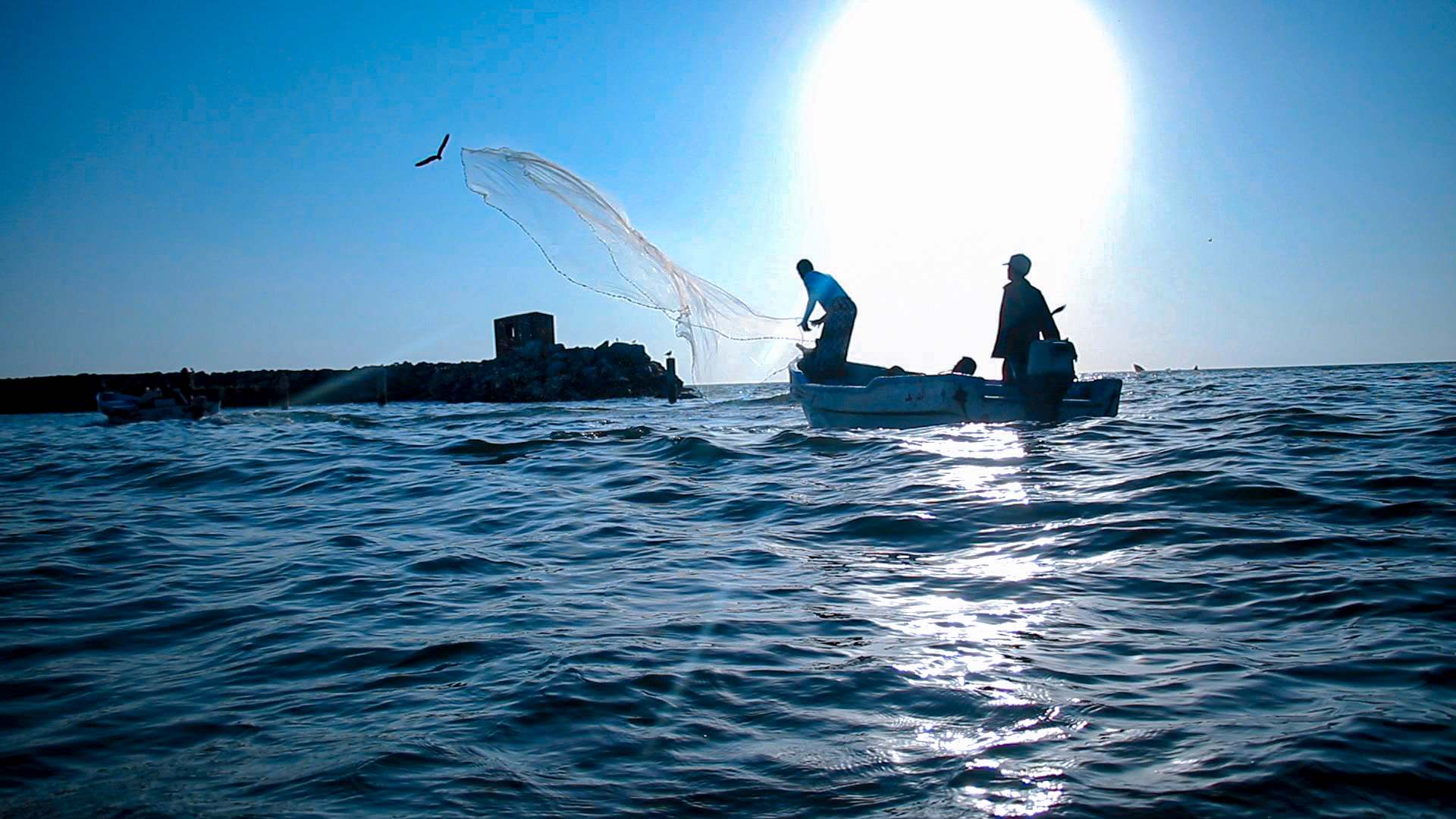
Due to its location on the Red Sea and its possession of a long coastline extending along the entire governorate, many fishing grounds, ports, and fishery facilities are spread throughout the coastal areas. Most of the inhabitants of coastal areas and settlements work in the field of fishing. Large quantities of fish are caught, with some meeting the local market demand within the governorate, and the rest being marketed to many other governorates. Some are also exported to the Kingdom of Saudi Arabia. The Red Sea is home to various types of fish such as shrimp, grouper, squid, tuna, and others, providing great investment opportunities in this field.
Industry:
Among the major industries in the governorate are cement, salt, cigarettes, and cotton ginning. The main manufacturing industries include carbonated beverages, juices, canned food, and grain mills. Plastic and aluminum industries are also present.
Handicrafts:
There are several handicraft and artisan industries in Al Hudaydah Governorate, which are important for attracting foreign tourists. The most important of these industries include:
Pottery and ceramics:
This craft is spread in several directorates of Al Hudaydah, such as Az Zahrā and Al Lahiya, but the city of Hays stands out with its diverse pottery products, including plates, cups, jars, and pitchers.
Silver, textile, cotton, quilting, and embroidery industries:
Zabid has long been known as a center for textile and weaving industries, including silk, tapestry, and various types of cotton (dyeing industry). The Al Durayhimi directorate is also famous for its colorful quilts.
Mat weaving:
This industry is famous in the island of Kamran and the Adh Dahi directorate and relies on palm fronds.
Fishing boat manufacturing:
It is one of the important industries in the city of Al Hudaydah, which has been known since ancient times as a harbor for fishing boats. The island of Kamran is one of the famous directorates for this industry.
Traditional Tihama fashion:
Tihama is known for its beautiful traditional costumes and the skill of its people in sewing and weaving. The factories of Beit Al-Faqih and Al Durayhimi still produce quilts, shawls, and headscarves.
Investment in Agriculture and Fishing:
• Land reclamation and cultivation.
• Cultivation of various types of grains.
• Establishment of livestock farms.
• Production of fresh dairy products.
• Poultry farming (layers, broilers, breeders).
• Fishing and marketing of fish.
• Breeding ornamental fish.
• Establishment of agricultural and fishery service units.
• Establishment of fish farms in fresh and saltwater.
• Establishment of farms for various important products using modern techniques and methods in agriculture and irrigation.
• Manufacturing of agricultural equipment, irrigation systems, pesticides, and chemical fertilizers.
• Livestock breeding and fattening, food production, fodder production, leather tanning, and other related industries.
• Fishing, especially in the exclusive economic zone, utilizing modern techniques associated with satellite technology. Also, exporting seafood products, manufacturing canned marine food, manufacturing maritime fishing equipment, and more.
• Establishment of veterinary laboratories.
Investment in Industry:
• Investment in establishing steam power plants for electricity.
• Investment in grain silo manufacturing.
• Investment in cigarette manufacturing and plastic products.
• Investment in preserved food, beverage, and juice manufacturing.
• Investment in iron smelting and shaping plants with high flexibility and adaptability.
• Investment in ship and small boat manufacturing.
• Investment in salt farms or saltworks.
Investment in the Tourism Sector:
• Investment in establishing tourist attractions.
• Investment in establishing tourist hotels.
• Investment in establishing tourist villages.
• Investment in establishing first-class tourist restaurants.
• Investment in establishing cities, amusement parks, and entertainment clubs.
• Investment in external tourism areas.
• Investment in internal tourism areas.
• Hotels, tourist villages, chalets, and other tourist accommodation facilities according to the designated tourism category for each project.
• Tourist floats, boats, yachts, and tourist maritime transportation services.
Investment in the Healthcare Sector:
• Establishment of specialized diagnostic centers.
• Establishment of clinics outside major cities.
• Establishment of specialized hospitals.
Investment in the Education Sector:
• Establishment of universities and schools.
• Establishment of hotel colleges and institutes.
• Establishment of vocational schools.
• Establishment of technical and vocational training centers and institutes.
Investment in the Mining Sector:
In the province, there are some minerals such as granite, black sand, dyes, ceramics, rock salt, gypsum, and some other clay minerals.
The most important tourist and historical landmarks in Al Hudaydah include:
Old City:
It is the oldest neighborhood in Al Hudaydah, dating back to the early 8th century AH (14th century CE) when the city was first established. The buildings in this city exhibit an ancient architectural style that closely resembles the construction style of old ports along the Red Sea coast. They are characterized by high-rise structures with intricately carved wooden ceilings. The Old City is surrounded by a wall with four gates: Moshref Gate, Nakheel Gate, Sitr Gate, and Yemen Gate. Some of the buildings in this area were constructed over 2,000 years ago.
Grand Mosque:
Located in the neighborhood inside the city walls, the Grand Mosque is one of the famous mosques in Al Hudaydah. Its architecture dates back to the early 12th century AH (18th century CE), as it was built in 1111 AH. The Grand Mosque features 48 columns and seven arches. It measures 31 meters in length and its external walls are adorned with colorful stones, while the interior is coated with white gravel. The mosque has well-distributed windows that allow ample natural light, and its beauty is enhanced by the moon-shaped decorations.
Al Jaishiya Mosque:
Situated in the Sidiqa neighborhood, this mosque was constructed in 1222 AH. There is debate about its builder, but the mosque is divided into two sections: the inner section, known as the prayer hall, which is roofed and surrounded by walls on all four sides, and the outer section, which is a covered courtyard surrounded by walls on three sides. The mosque also features a tall minaret with a captivating spiral cone-shaped structure adorned with beautiful stone engravings. The minaret stands as a prominent and distinctive landmark in Al Hudaydah.
Bab Moshref Castle:
This castle is one of the forts that existed on the ancient wall overlooking Bab Moshref. It was built by Sharif Hussein bin Ali during his control of the region in 1256 AH. The castle consists of two floors made of fired bricks and mud coated with lime plaster.
Corniche Castle:
Located 1 kilometer south of the old port on a high mound facing the sea, Corniche Castle was constructed in 946 AH (1538 CE) during the first Ottoman presence in Yemen. It served as a defensive stronghold and later was used as a prison by the Ottomans and subsequent rulers.
Al Hudaydah Museum:
This building was constructed during the Ottoman era and served as a financial collection center. It remained in use until the last era of the Imams. The two-story structure features wooden balconies on the exterior, typical of the prevalent architectural style at that time. The central room on the second floor has a dome-shaped ceiling, and the building is made of fired bricks and mud coated with lime plaster.
Public Park:
One of the city's most important parks and recreational areas, located 4 km from the city center on the Al Hudaydah-Sana'a road. The park includes sports fields for football, tennis, and basketball, as well as two swimming pools for adults and children. It features diverse fields, gardens, cafeterias, artificial lakes, and landscaped terraces adorned with ornamental trees and various flowers.
Water Reservoirs:
There are ten water reservoirs scattered throughout Al Hudaydah. These reservoirs serve the current drinking water storage function, receiving water through underground tunnels. They were constructed using solid stones sourced from the Salif and Kamran regions. The reservoirs are underground cavities accessed by stone staircases, and they feature domed ceilings made of fired bricks and mud. These reservoirs are among the distinctive archaeological sites in Al Hudaydah Province.
Beaches and Resorts:
Among the beautiful beaches and tourist resorts, there is the extended Corniche Beach, spanning a distance of 2 km and equipped with cafeterias and comfortable chairs along the shore. There is also Arj Beach, which is considered a tourist resort and a natural retreat for the residents of Al Hudaydah. It is one of the most beautiful Yemeni beaches adorned with palm and dom trees. It is located north of Al Hudaydah, 15 km between the two river estuaries of Wadi Sardd from the north and Wadi Saham from the south.
People's Park:
Located in the city center, it is considered an important recreational area where the city's residents visit in the evenings to relax. The park is filled with ornamental trees, plants, and cafeterias. It is now one of the prominent attractions of Al Hudaydah city.
